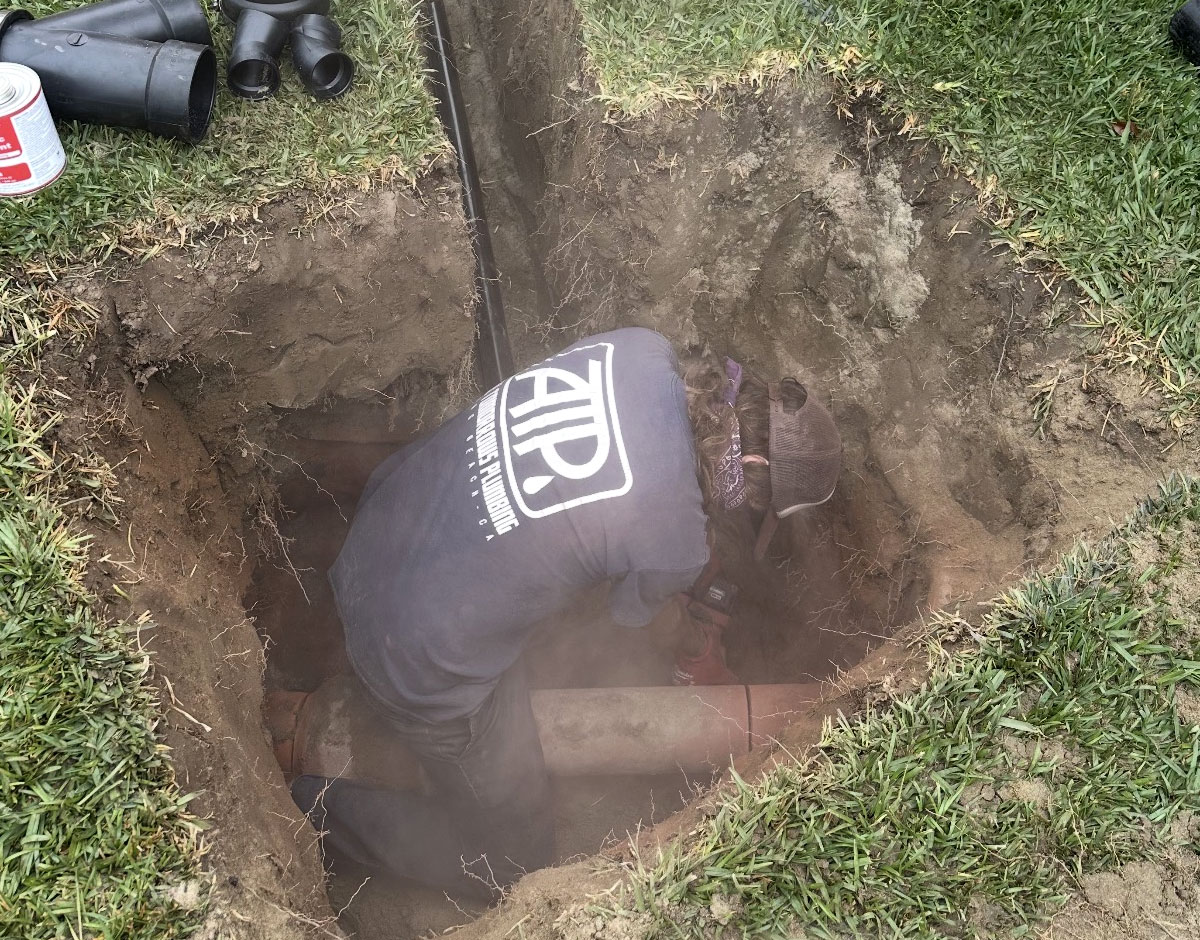
If you live in Long Beach and keep dealing with slow drains, gurgling toilets or sewer backups that seem to come back no matter how many times the line is cleared, the problem may not be an ordinary clog.
Tree roots could be growing inside your sewer line.
Long Beach is known for beautiful mature trees and older homes — but that combination can also create the perfect conditions for sewer line problems.
At All Tomorrow’s Plumbing, we help homeowners throughout Long Beach diagnose recurring sewer and drain issues, including tree root intrusion, damaged sewer lines and aging underground plumbing.
Here’s how to tell when tree roots may be causing your plumbing problems — and what you can do about it.
Why Tree Roots Get Into Sewer Lines
Tree roots naturally grow toward sources of moisture.
A sewer line normally shouldn't attract roots because it is a closed system. But older pipes can develop small cracks, loose connections or separated joints.
Once moisture begins escaping from the pipe, nearby roots can grow toward it.
Even a tiny opening may eventually allow roots inside.
Once roots enter the sewer line, they can continue growing and create a web that catches toilet paper, grease and other waste moving through the pipe.
Eventually, what started as a small intrusion can become a major sewer blockage.
Why Older Long Beach Homes Can Be Vulnerable
Long Beach has many established neighborhoods with older housing and mature landscaping.
In older plumbing systems, sewer laterals may contain materials such as clay or cast iron. Over decades, pipes can deteriorate, shift or develop openings at joints.
That means homeowners in established Long Beach neighborhoods should pay particular attention to recurring sewer problems.
A drain that clogs once doesn't necessarily indicate a damaged sewer line.
A drain that keeps clogging every few months is a different story.
7 Signs Tree Roots May Be Growing in Your Sewer Line
1. Multiple Drains Are Slow at the Same Time
One slow sink is usually a localized plumbing problem.
But when your toilet, shower and sinks all begin draining slowly, the restriction may be farther down the plumbing system.
If several fixtures are affected at once, your main sewer line should be investigated.
2. Your Toilet Gurgles
A toilet that bubbles or gurgles when another fixture drains can indicate that air and wastewater aren't moving properly through the drainage system.
You may notice this when:
- Running the washing machine
- Taking a shower
- Draining a bathtub
- Using another toilet
Occasional plumbing noises aren't automatically an emergency, but repeated gurgling combined with slow drains deserves attention.
3. Sewer Backups Keep Coming Back
This is one of the biggest warning signs.
You clear the drain.
Everything works normally.
Then a few weeks or months later, the exact same problem returns.
Repeated sewer backups can indicate that clearing the blockage isn't addressing the underlying problem.
If roots are entering through a damaged pipe or joint, simply opening the line may provide temporary relief while leaving the entry point intact.
4. You Smell Sewage
Persistent sewer odors inside or outside your home can indicate a drainage or sewer problem.
If the smell is accompanied by slow drains, bubbling toilets or recurring backups, it is worth having the sewer system inspected.
5. Water Backs Up Into the Shower or Tub
This can be an especially important warning sign.
Because showers and tubs sit relatively low in the plumbing system, wastewater from a main-line blockage may appear there when another fixture is used.
For example, you may flush the toilet and notice water appearing in the bathtub.
That isn't a normal drain clog.
Stop using unnecessary water and have the plumbing checked.
6. Parts of Your Yard Are Suddenly Wet or Extra Green
A damaged underground sewer line may release moisture into the surrounding soil.
You might notice:
- Unusually green patches of grass
- Soft or soggy areas
- Unexplained wet spots
- Changes in the soil near the sewer line
There can be other explanations for these symptoms, but combined with indoor drainage problems, they can point toward an underground sewer issue.
7. Snaking the Drain Doesn't Solve the Problem
A drain snake can be extremely useful for certain clogs.
But clearing an opening through a blockage isn't the same thing as repairing a damaged sewer pipe.
If the same sewer line needs to be cleared repeatedly, it's worth finding out why the blockage keeps returning.
How Do Plumbers Know If Roots Are in a Sewer Line?
One of the most useful diagnostic tools is a sewer camera inspection.
A specialized camera can be sent through the sewer line so the plumber can see what's actually happening underground.
Depending on the condition of the line, an inspection may reveal:
- Tree root intrusion
- Cracked pipe
- Separated joints
- Corrosion
- Heavy buildup
- Offset pipe sections
- Bellied or sagging pipe
- Partial or complete collapse
This matters because different problems require different solutions.
You don't want to replace a sewer line that simply needs cleaning.
And you don't want to keep paying to clear a line that's structurally failing.
Diagnose first. Repair second.
Can Hydro Jetting Remove Tree Roots?
Hydro jetting uses high-pressure water and specialized equipment to clean buildup and obstructions from plumbing lines.
Depending on the condition of the pipe and the type of root intrusion, professional cleaning may be part of the solution.
But removing roots doesn't necessarily eliminate the reason they entered the pipe.
If roots entered through a crack or failed joint, that opening may still exist after the line has been cleared.
That's why a camera inspection can be so valuable when sewer problems repeatedly return.
When Does a Sewer Line Need Repair?
Not every root intrusion requires replacing an entire sewer line.
The appropriate repair depends on factors including:
- Location of the damage
- Pipe material
- Overall pipe condition
- Number of damaged areas
- Severity of root intrusion
- Whether the pipe has cracked or collapsed
- Accessibility of the sewer line
Some situations may be addressed with cleaning or targeted repairs.
Other sewer lines may benefit from trenchless sewer repair or sewer lining, which can repair certain damaged lines without excavating a long trench through the property.
If a pipe is severely collapsed or structurally compromised, a different repair or replacement method may be necessary.
The important thing is choosing the repair based on what the inspection actually shows.
Are Tree Roots Going to Come Back?
They can.
If roots are removed but the opening that allowed them into the sewer remains, new root growth may eventually enter the line again.
This is one reason homeowners sometimes experience the frustrating cycle of:
clog → drain cleaning → temporary improvement → another clog.
When sewer problems repeatedly return, it may be time to investigate the condition of the pipe rather than treating each backup as an isolated clog.
Buying an Older Home in Long Beach?
A sewer camera inspection can also be worth considering when purchasing an older property.
A home's sinks and toilets can appear to work perfectly during a walkthrough while the underground sewer lateral has cracks, roots, corrosion or other problems that aren't visible from inside the house.
Knowing the condition of the sewer line can help you better understand the plumbing system you're buying.
Tree Roots in Your Sewer Line? Call a Long Beach Plumber
If your drains keep clogging, your toilets are gurgling or you've already had the same sewer line cleared multiple times, don't keep guessing.
All Tomorrow’s Plumbing provides sewer and drain services throughout Long Beach, Los Angeles County and Orange County.
We can help identify what's causing the problem and explain your options — from sewer camera inspections and hydro jetting to sewer repair, trenchless solutions and replacement when necessary.
Whether you're dealing with tree roots, an aging sewer line or a sudden plumbing backup, our goal is to find the actual cause and recommend the right solution for your property.
Call All Tomorrow’s Plumbing at (714) 290-7401 to schedule service.
Frequently Asked Questions
How do I know if tree roots are in my sewer line?
Recurring drain clogs, multiple slow drains, gurgling toilets, sewage odors and repeated sewer backups can indicate tree root intrusion. A professional sewer camera inspection can help confirm what's happening inside the pipe.
Can tree roots break a sewer pipe?
Roots often enter through an existing crack, gap or failed joint. As root growth expands inside and around the pipe, it can contribute to additional blockage and damage.
Will hydro jetting permanently fix tree roots?
Hydro jetting or other professional cleaning methods may remove obstructions, but if the pipe has an opening that allows roots to enter, the underlying structural problem may still need repair.
Do I need to replace my entire sewer line?
Not necessarily. Some sewer problems can be addressed with cleaning, spot repairs or trenchless repair methods. The condition and location of the damaged pipe determine the appropriate solution.
What are signs of a main sewer line clog?
Common warning signs include multiple fixtures draining slowly, toilets bubbling or gurgling, wastewater backing up into tubs or showers, sewage odors and recurring drain problems.
Who repairs sewer lines in Long Beach, CA?
All Tomorrow’s Plumbing provides sewer inspection, cleaning and repair services for homeowners and businesses in Long Beach and surrounding Los Angeles and Orange County communities.